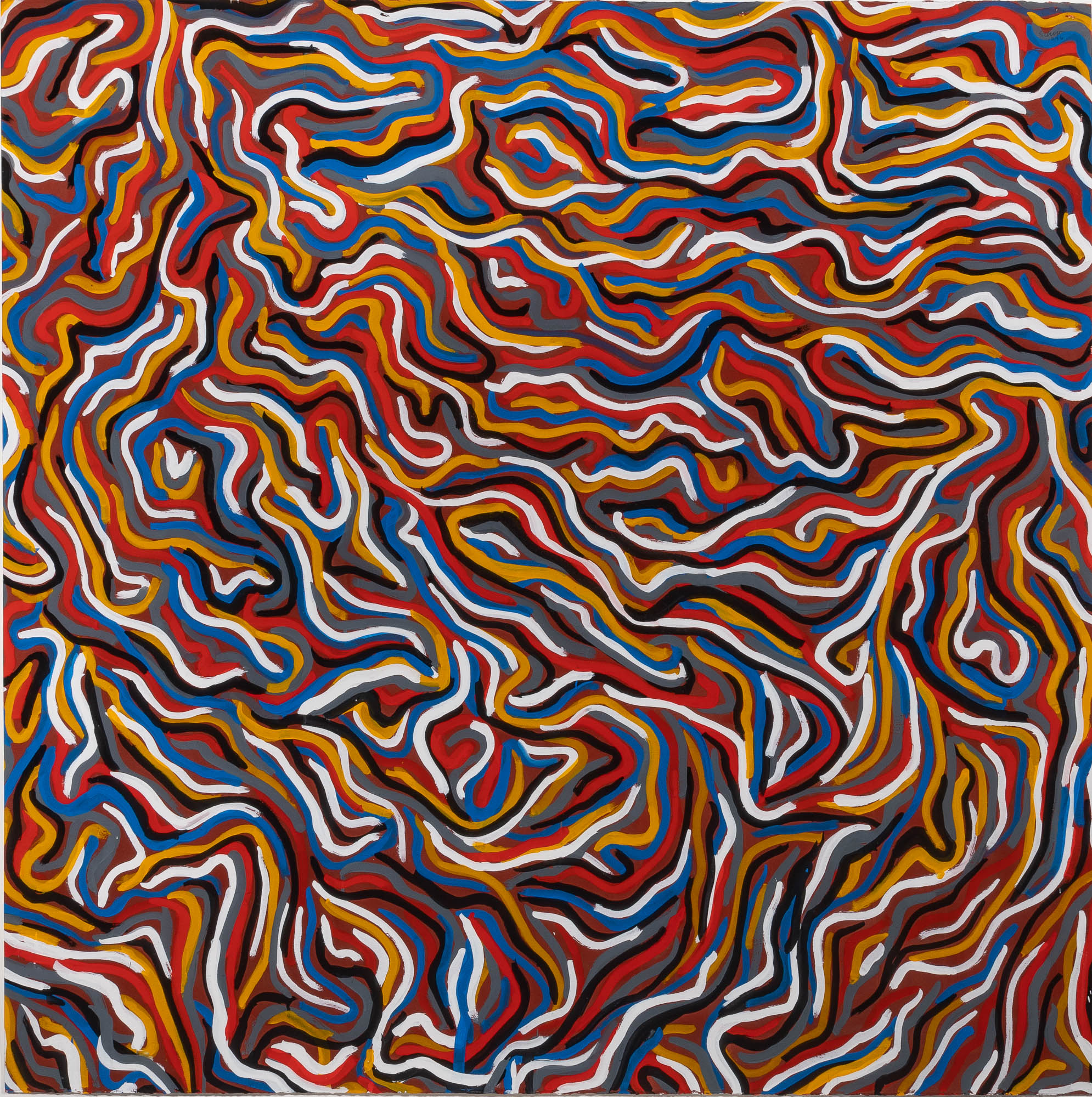
Sol LeWitt
American, 1928-2007
Sol LeWitt was an American artist whose work in Conceptual art and Minimalism reshaped the trajectory of 20th-century art. Born in Hartford, Connecticut, LeWitt maintained deep ties to the East Coast while working extensively in New York City and later in Chester, Connecticut. After earning his BFA from Syracuse University in 1949, LeWitt served in the U.S. Army during the Korean War. In the mid-1950s, he moved to New York City, where early roles in graphic design and museum work exposed him to a rising generation of post-war artists.
LeWitt gained recognition in the 1960s for his “structures”—a term he preferred over “sculptures”—comprised of modular, open-cube forms that emphasized logic and repetition. He later introduced his now-iconic wall drawings in 1968, which were created using written instructions and executed by teams of draftspeople. This conceptual shift placed the importance on the idea itself rather than the artist’s hand, a defining factor of Conceptual art.
Over time, LeWitt’s work evolved in both scale and complexity. His later wall drawings featured lush color, intricate patterning, and immersive architectural presence. Today, LeWitt’s work is held in major museum collections worldwide and remains central to discussions on the role of concept and collaboration in contemporary practice. For collectors, his pieces offer not only historical significance but also a uniquely and visually compelling presence. His legacy endures through the continued realization of his instructions, reaffirming his belief that “the idea becomes a machine that makes the art.”


